Educational past
Knowledge from the past for solutions today
In the themed year 'Conservation of Biodiversity', CAG and KIEN, together with the heritage communities of hedge laying and beekeeping, looked for sustainable applications of these intangible heritage practices. The opportunities are great, but so are the challenges. To use intangible heritage as a lever in climate challenges, there are four major points of attention.
1. Need for a change in mentality
Water and soil have always shaped the landscape. But over the past 70 years we have shaped that landscape to our will. Watercourses were straightened, infertile soils were made fertile and the landscape was designed according to our own wishes. In the Netherlands alone, more than 200,000 kilometres of hedges disappeared due to economies of scale and land consolidation. Less than half of the hedges that were once present remain today.
We are now reaching the limits of that idea that nature is feasible. It is time to live with the landscape again instead of controlling it. Water and soil-driven thinking must once again become central, with attention to the importance of ecosystem services. But, that requires a change in mentality. Intangible heritage can help with that. It contains a wide range of ideas and inspiration that is based on centuries of coexistence with nature and the landscape. It creates a connection between man and nature.
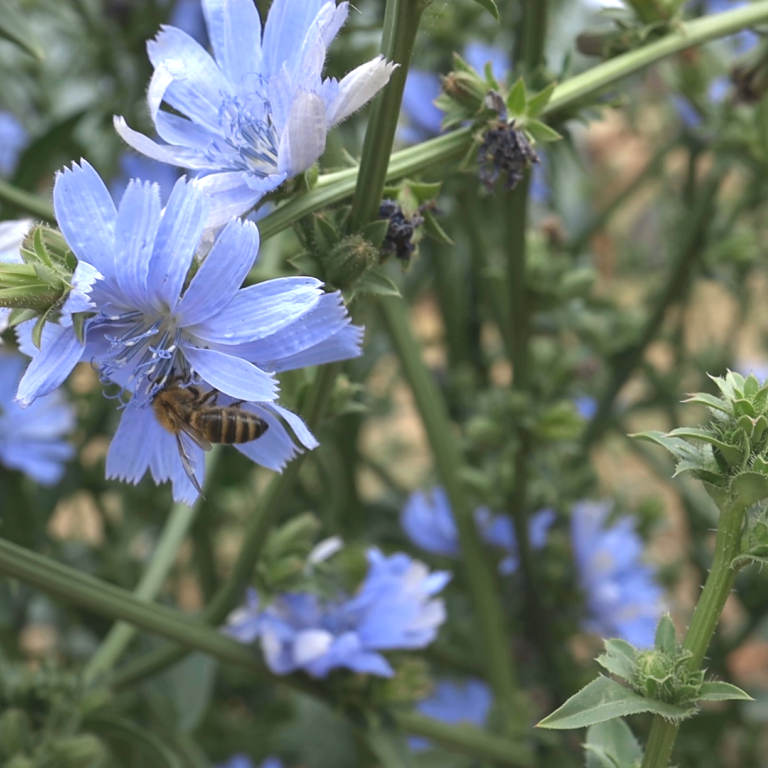
Hobby beekeepers can make a huge difference, in the knowledge transfer on biodiversity and on new techniques. It is wonderful how that old craft has survived. And if we now look at the new technologies that are being used not so much to push that old craft away, but to start valorizing that old craft again. I think that is wonderful.
– René De Backer, chairman of Vlaams Bijeninstituut
2. Co-production as a key word
Heritage communities can complement knowledge about climate and environmental changes with local insights. But looking to the past is not always self-evident for policy makers or watercourse and landscape managers. That is why co-production is essential: by involving different parties and knowledge systems from the start in drawing up policy and management plans, a broader and better substantiated policy is created.
A good example of this can be found in the Ooijpolder, in the Dutch Gelderland. Over the past 15 years, various experiments have been carried out here to restore biodiversity in the nature reserve, such as the construction of wooded banks and flower strips. This was done in close cooperation between the Vereniging Nederlands Cultuurlandschap, the Via Natura foundation (which focuses on landscape management and participation) and local farmers, with a shared long-term vision. With success!
Co-production offers heritage communities the opportunity to actively share their knowledge and to feel involved in sustainable, future-oriented area development. At the same time, policymakers gain insight into the opportunities and challenges surrounding the active role of heritage. This makes an integrated approach from different perspectives and across policy domains possible. And that is also necessary. In practice, nature and culture are inextricably linked.
3. Need for policy and good examples
The link between sustainable development and heritage still receives too little attention. CAG and KIEN want to make policymakers, professionals and the public aware of the importance of this connection. Fortunately, various policy documents and strategies already contain starting points to give heritage an active role. Think of Vision 2050, the bee strategies in Flanders and the Netherlands, or the EU biodiversity strategy, which stipulates that at least 10% of agricultural land must be converted into biodiverse landscapes by 2023 – including hedgerows. However, more is needed. Concrete best practices and visionary targets are essential to stimulate a cultural shift. They show how our heritage can contribute to a sustainable future in various ways and pave the way for effective policy.
If you plant a hedge, if you maintain and trim it regularly, it also fulfils its ecological functions. Because it blooms, it provides nesting opportunities, it provides nectar production, it provides everything.
- Dirk Cuvelier – hedge layer and former coordinator of Regionaal Landschap Westhoek
4. Substantiate with research
Intangible heritage plays a crucial role in understanding the evolution of the landscape. Historical forms of land use and water management have not only shaped the landscape, but also bring their own ecological values. Hedgerows, for example, function as ecological, green corridors, rich in flora and a home for many insects and birds. Beekeepers, in turn, contribute to biodiversity by nurturing their bees and planting native flowers and nectar plants, which benefits both honeybees and other pollinators .
But heritage does not only influence nature. It also contributes to identity formation and social cohesion. Practitioners of traditional practices such as hedge laying feel a strong connection with the landscape and are proud of their craftsmanship. This heritage practice therefore has a broader impact than just the preservation of landscape elements.
Research into these effects can be strengthened by working together with heritage communities. Citizen science projects offer an opportunity to use their knowledge and thus contribute to innovation and gain new scientific insights into climate change.
In addition, history also provides us with specific ideas on how we can adapt to a changing environment. Research into the changing ecosystem services of the landscape also teaches us how the landscape and our dealings with it evolved. Cultural heritage is often included in the 'cultural ecosystem services', but also plays a role in producing and regulating ecosystem services . For example, hedgerows not only provide an aesthetic and historical added value, but they also contribute to climate adaptation through carbon storage and the prevention of floods, pests and drought.
If you can calculate how much carbon is stored and what the contribution of hedges is to preventing all kinds of damage, such as the spread of pests, flooding or counteracting the effects of drought, then you arrive at significant amounts per kilometer of hedge that represent that value.
– Kenneth Rijsdijk – biogeographer Institute for Biodiversity and Ecosystem Dynamics - University of Amsterdam
Conclusion
Embedding intangible heritage into development, management, policy and research requires a new perspective. It challenges conventional thinking patterns and established values. The themed year 'Conservation of Biodiversity' reveals that there are still many needs: for good examples, for further research, for awareness about the intangible heritage of water and land, for safeguarding that intangible heritage, for policy, for cross-domain and participatory management... Intangible heritage of water and land has shaped and determined the landscape. Let us ensure that it can continue to play a leading role in the future.